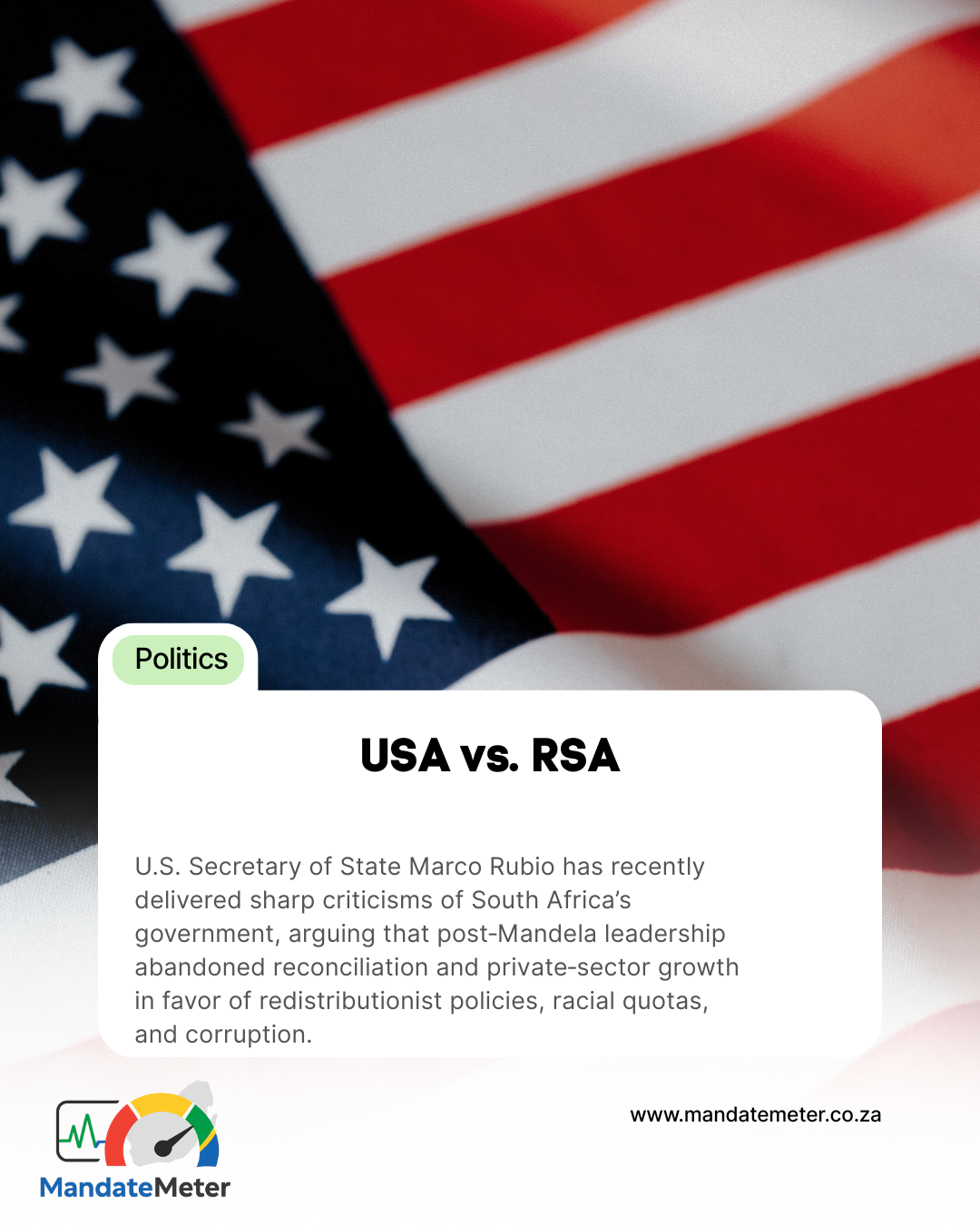
U.S. Secretary of State Marco Rubio has sharply criticized South Africa’s government, arguing that post‑Mandela leadership abandoned reconciliation and private‑sector growth in favor of redistributionist policies, racial quotas, and corruption. He claims this has driven talent abroad, stagnated the economy, and led to South Africa’s exclusion from the upcoming 2026 G20 summit in Miami.
Key Points from Rubio’s Remarks
- Exclusion from G20: South Africa will not be invited to the 2026 summit under U.S. leadership.
- Criticism of ANC Policies: Rubio accused the government of scapegoating citizens and the U.S. instead of taking responsibility.
- Economic Concerns: He described South Africa’s economy as burdened by regulation “driven by racial grievance” and crippled by corruption.
- Human Rights Angle: Rubio alleged tolerance for violence against Afrikaner citizens, claims rejected by Pretoria as unfounded.
Implications
Rubio’s remarks highlight growing diplomatic tensions and raise questions about South Africa’s global standing. For citizens, this is not just about foreign policy — it connects directly to how our economy, governance, and reputation are perceived worldwide.
 Loading ...